For Developers
Failure Memory & Operational Learning
Stop Solving the Same Problem Twice.
Transform transient production anomalies into a structured, permanent system-of-record. ChatSee builds a persistent institutional memory of agent behavior, ensuring every failure leads to a deterministic improvement in your autonomous fleet.
THE Solution


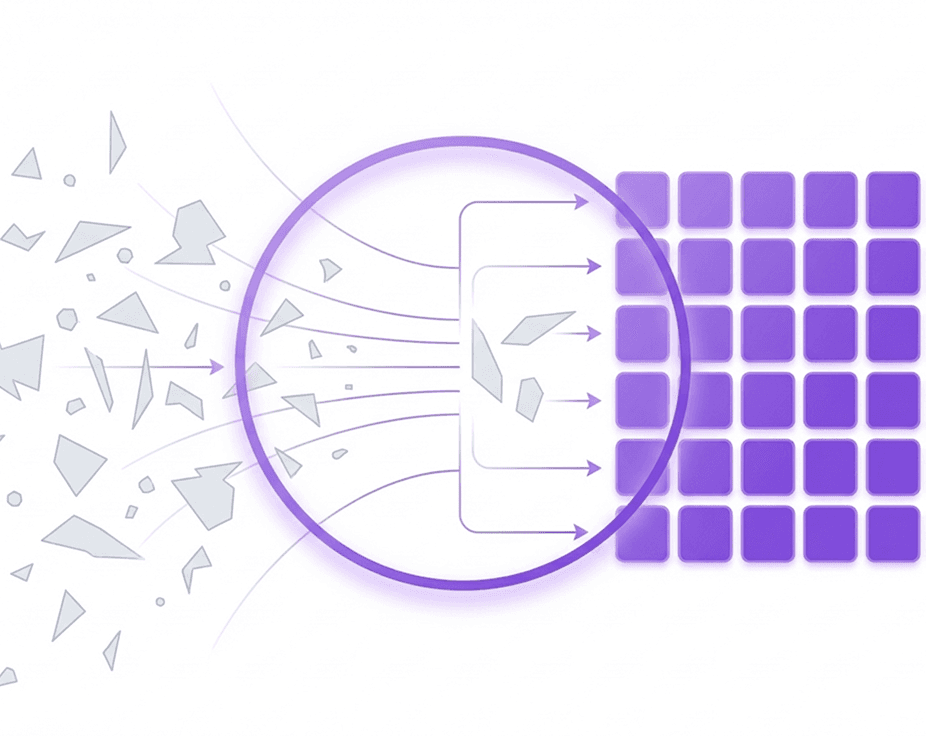
A unified, searchable registry of every significant behavioral event across your entire enterprise agent stack.
Persistent Knowledge Storage
Save high-fidelity traces of failures indefinitely, creating a forensic audit trail that survives model upgrades and platform migrations.
Cross-Agent Intelligence
Share "lessons learned" from one agent (e.g., Sales) with another (e.g., Support) to prevent the same logic errors from occurring in different departments.
Institutional Memory
Ensure that when key engineers leave, the knowledge of how and why the AI failed—and how it was fixed—stays within the organization.
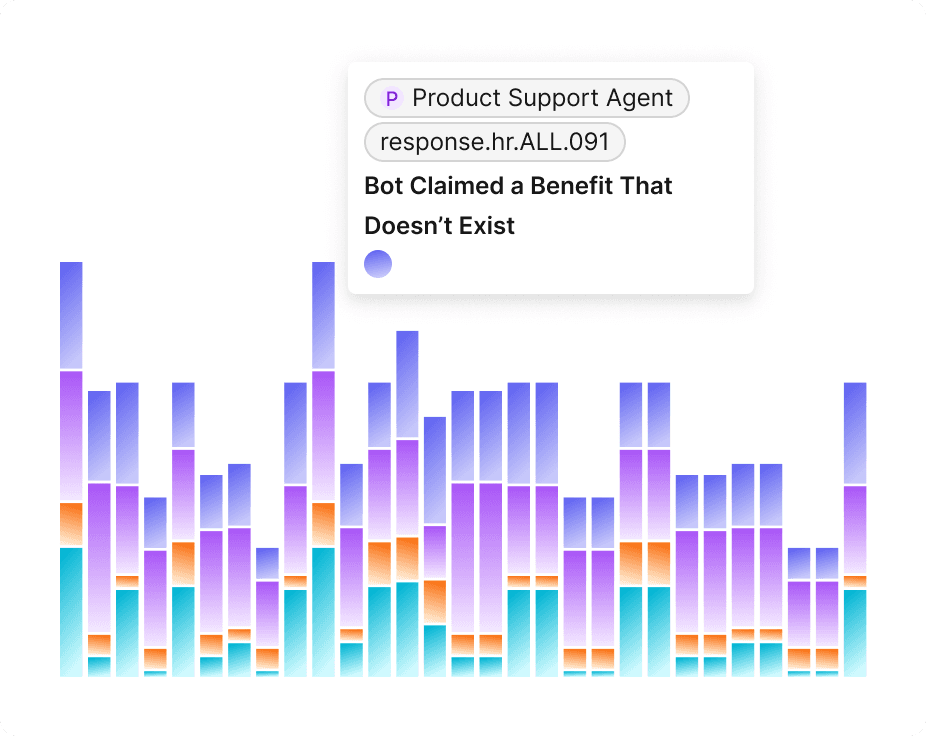
Automatically categorize raw session data into a sophisticated behavioral taxonomy that identifies systemic flaws.
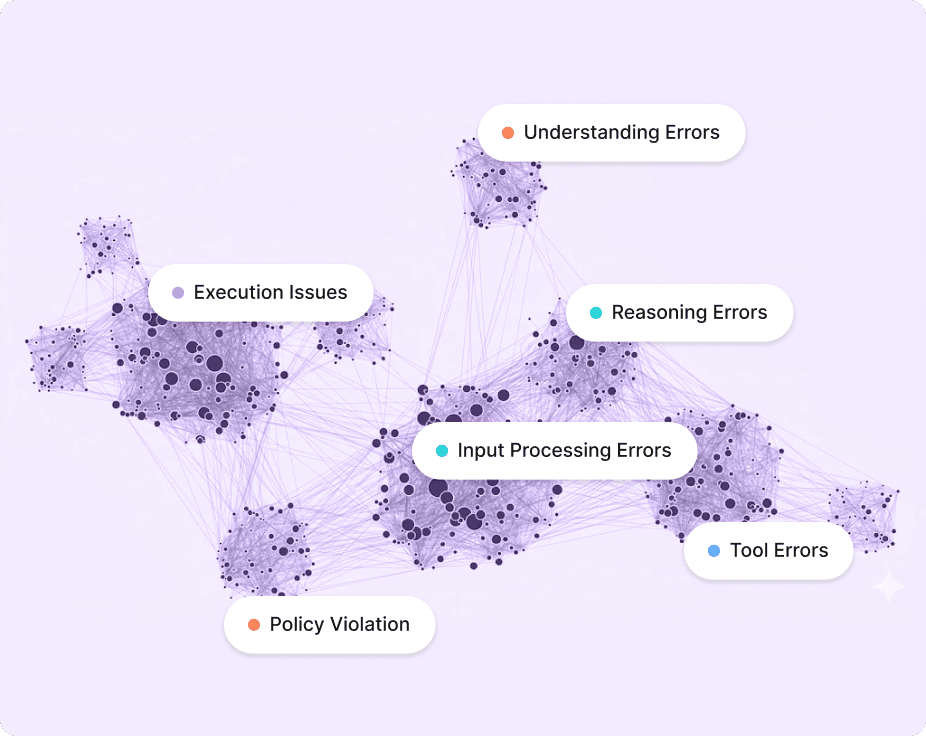
Automated Taxonomy Mapping
Every interaction is instantly tagged against a standardized failure library (e.g., "Hallucination," "Tool-Call Loop," "Policy Breach").
Incident Correlation & Clustering
Identify when seemingly unrelated session errors are actually part of a larger, systemic model drift or prompt degradation.
Correctness Labeling
Move beyond "Pass/Fail" to nuanced labels that describe how an agent failed, providing the "Gold Data" required for advanced model training.
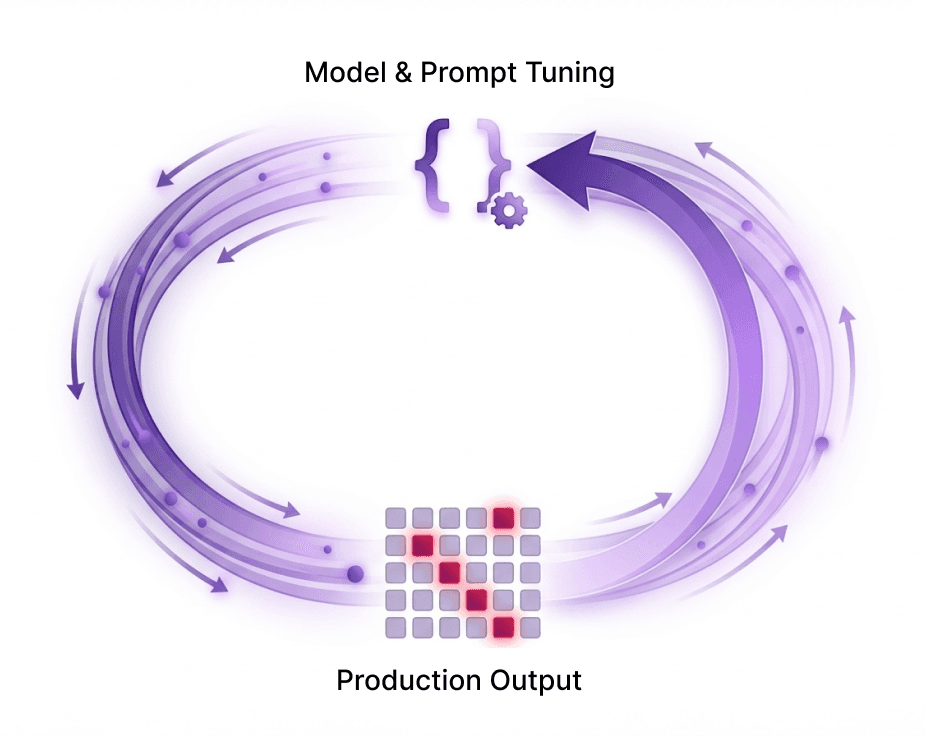
Close the loop by converting failure data into "Hardening Kits" that developers can use to optimize model performance.
Agent Optimization Artifacts
Export curated packages of production failure data directly into prompt-tuning and retraining workflows, replacing synthetic test cases with real-world edge cases .
Predictive Hardening
Use historical failure patterns to anticipate and mitigate risks in new agent deployments before they reach a single user.
Validation Loops
Use the "Failure Memory" as a benchmark to run automated regression tests, ensuring that a fix for one problem doesn't re-introduce a past error.
Get Started